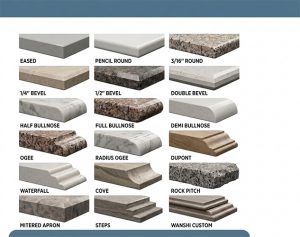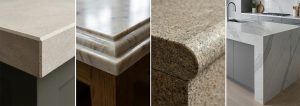

For architects, interior designers, and homeowners, selecting the premium stone slab is only the first step. Once the material is finalized, the next critical decision—one that bridges the gap between raw stone and finished furniture—is the edge profile.
Whether you are designing a high-traffic master bathroom vanity or the centerpiece kitchen island of a luxury estate, the edge profile dictates the look, feel, and long-term performance of your stone surface. At WANSHI Stone, we have spent years collaborating with trade professionals to refine the art of stone fabrication. In this guide, we break down how to choose the profile that elevates your design vision.
Why the Edge Profile Matters
Aesthetic Definition: It defines the style—whether modern, minimalist, traditional, or transitional.
Safety & Comfort: It minimizes the risk of sharp corners causing physical discomfort.
Durability: Certain profiles are more prone to chipping than others, depending on the mineral composition of the stone.
Choosing the Right Profile for Your Space
1. The Square Edge (Contemporary & Architectural)
Best Application: Modern kitchens, sleek floating vanity tops, and professional office desks.
WANSHI Perspective: To avoid an overly “razor-sharp” tactile feel, we typically perform a micro-arriss—a precise, near-invisible bevel that removes the bite from the corner without altering the silhouette.
2. The Eased Edge (The Industry Standard)
Best Application: Universal; it complements virtually every interior design style.
WANSHI Perspective: This is our primary recommendation for high-use vanity tops where safety and durability are paramount. It offers a clean look that never distracts from the stone’s natural veining.
3. The Bullnose (Soft & Organic)
Best Application: Traditional, Farmhouse, or Mediterranean-style bathrooms.
WANSHI Perspective: A bullnose effectively reduces the perceived thickness of a slab. If you are looking for a soft, “huggable” feel, this profile is the gold standard.
Market Insight: In many granite wholesale markets, particularly across Africa, the bullnose is the preferred standard. Our experience shows that for granite countertops and stair treads (stair risers), the bullnose provides unparalleled durability. Because granite is exceptionally hard and brittle, this rounded profile significantly reduces the risk of edge chipping during transit and in high-traffic daily use.
4. The Ogee Edge (Classical Luxury)
Best Application: Classical vanity tops, ornate cabinetry, and formal kitchen islands.
WANSHI Perspective: Fabrication of an Ogee edge requires advanced CNC programming and skilled hand-polishing to ensure the curves are fluid and ripple-free. It is a signature of high craftsmanship we often employ in luxury residential projects.
5. The Mitered Edge (The Architectural Statement)
Best Application: Thick-look islands and dramatic vanity fronts.
WANSHI Perspective: This is where our vein-matching expertise truly shines. When executed correctly, the stone pattern flows from the top surface down the edge, making the entire piece appear as though it were carved from a single solid block.
Edge Profile Selection Guide at a Glance
| Profile Name | Visual Style | Safety & Durability | Best Applications |
| Square | Modern, Sharp, Minimalist | Requires micro-arriss for safety | Minimalist kitchens, commercial |
| Eased | Classic, Clean, Subtle | High (Most recommended) | Universal (Kitchen/Bath/Office) |
| Bullnose | Soft, Organic, Traditional | Highest (No sharp edges) | Farmhouse, Mediterranean, Stairs |
| Ogee | Luxurious, Ornate, Artisan | Medium (Complex curves) | Traditional villas, high-end hotels |
| Bevel | Sophisticated, Light-catching | Medium (Easy to clean) | Modern luxury, budget-conscious |
| Waterfall | Bold, Architectural | High (Miter-dependent) | Kitchen islands, statement vanities |
How Material Choice Shapes Fabrication
Quartz & Sintered Stone: Being man-made and incredibly uniform, these materials hold sharp edges exceptionally well. For contemporary builds, square and eased edges are the standard for these surfaces.
Natural Marble & Limestone: As crystalline, porous stones, they require a softer touch. Based on our experience in hospitality projects, we advise against overly sharp edges on marble bathroom vanities, as they can be prone to microscopic chipping. An eased or light bevel edge is recommended for long-term structural integrity.
Travertine: For unfilled travertine, the edge becomes a textural element. A clean, eased edge provides a beautiful, intentional contrast to the raw, pitted surface of the stone’s face.
The WANSHI Approach: From Template to Final Polish
Digital Templating: We use precision digital templating to ensure your vanity or kitchen layout is accurate to the millimeter.
Your Edge, Our Craft: Making the Right Choice
If you are currently reviewing drawings or finalizing a material schedule, reach out to our team. We are here to provide the technical clarity you need—from checking the feasibility of a complex mitered joint to ensuring the safety of a vanity top’s edge. Let’s make sure the details are as precise as your vision.