 EN
EN

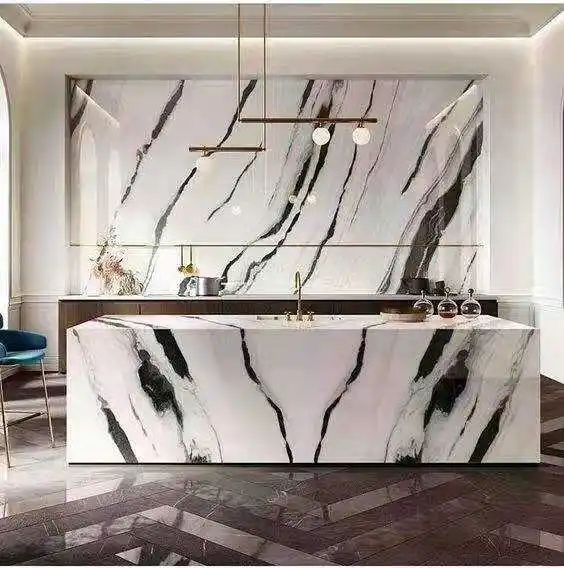
The designers and constructors typically equate the travertine and recycled marble in specifying natural stone in green projects. The two have their own benefits, however, the impact of environmental footprints is highly different. To make your own decision on which material is more sustainable, four main areas of sustainability, such as the extraction methods and their effect on the environment, are discussed below.
Extraction and Raw Material Sourcing
Travertine is a form of limestone that is deposited by the mineral springs especially the hot springs. It is extracted in large blocks in unique open-pits. Quarrying involves the clearing of vegetation, topsoil and overburden rock though it is a natural and abundant process. Cutting, drilling and blasting that are energy consuming release dust and carbon. But numerous quarries of travertine are found in places where there are robust land-reclamation policies.
In contrast, no new quarrying is required to produce recycled marble. It is constructed using rejected blocks, fabrication shop scraps and post industrial waste, including the marble offcuts, broken slabs, polishing slurry and rejected slabs. By extracting this material out of landfills, recycled marble will be virtually free of practically all the environmental damage caused by mining processes. Recycled marble has an advantageous position in the sourcing in an environment where minimization of wastes is a major concern in a project.
Processing Energy and Water Use
Travertine processing is either sawing, honing, tumbling or filling (in case of natural holes) with diamond blades and abrasives. Cooling and dust suppression is done by water and slurry should be handled. The carbon footprint includes heavy block transportation which makes the energy footprint moderate.
Marble can be recycled, and typically involves crushing waste material, mixing it with a small percentage of environmentally friendly binder (typically cement or resin-based, but low-VOC versions are available), to form new slabs or tiles. This can be less energy consuming compared to quarrying and transportation of virgin stone-more so where the recycling plant is close to the sources of waste. However, the purchasers need to ask about what the binder is made of: the plant-based or cementitious binders are greener than the petroleum based resins.
Life Cycle and End-of-Life Disposal
Travertine is durable, and can last decades or centuries. When it is at the end of life, it can be crushed to aggregate, backfill or new terrazzo- no harmful leaching. Its long life cycle implies minimized replenishment and, hence, decreased environmental harm in the long run. However, the absence of rehabilitation of sites may result in quarry scars.
Marble which has been recycled is also very good in durability of countertop, flooring and wall cladding. The end-of-life can be recycled again as new composite stone provided that the binder can be crushed. Some binders cannot be easily re-recycled, inquire with your supplier. Preferably, select recycled marble that is produced with cementitious or lime-based binders, which are in favor of the circular economy.
Certifications and Supply Chain Transparency
WanShi Stone aims at making sure that both materials are of high quality. Our travertine is extracted using water-recycles and rehabilitation strategies. We use up to 90% post-industrial waste marble in our recycled marble. But when avoiding synthetics is important to you, travertine prevails. In case you are concerned about taking garbage off of landfills, then recycled marble is the way to go.4
Conclusion
When you are more concerned about not having to mine new marble and instead to divert the industrial waste, then recycled marble will be the more friendly option, but you need to choose a low impact binder. Travertine is a recyclable, durable and natural stone that is quarried, yet its footprint cannot be avoided. To be greenest, recycled marble on high-visibility surfaces can be used, as well as locally available travertine on structural or exterior. We can offer all these at Xiamen Wanshi through open quality control since with precise selection of slabs to our professional packaging, your sustainable selection can also offer lasting beauty.